LOOKING FOR SPOT
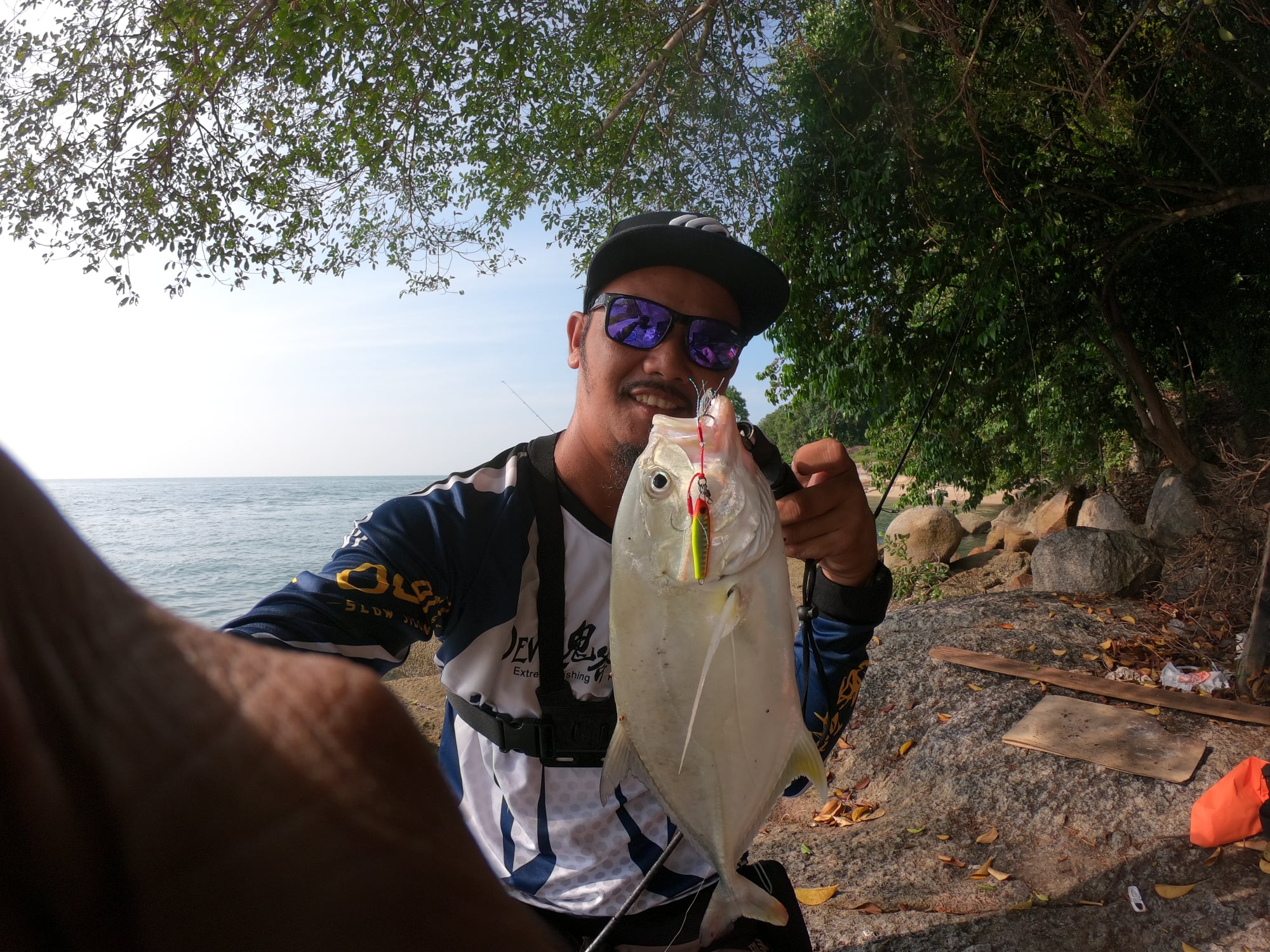
When the water is clear and the current is moving slightly faster, juvenile Giant Trevally (GT), or what anglers commonly call “baby GT”, can become very aggressive and readily smash a jig. Specimen below 2kg can often be found hunting around shallow coastal waters, especially around areas with plenty of structure.
TARGETING GT: JIGGING TIPS & JIG SPECS
Whenever possible, focus on spots close to poles, rocks, bridge structures or other underwater structures. These areas usually hold plenty of food, such as small baitfish, prawns and crabs, making them a natural hunting ground for predatory fish.
For this type of spot, try keeping your jig around 1 metre above the bottom. Give the jig a few short lifts or occasional sharp jerks to get its attention and trigger a reaction from nearby GTs.
Fast jigging is one of the more common techniques for targeting GT, but sometimes slowing things down and giving the jig a different action can also work surprisingly well. GTs don't always feed the same way every day, so changing your retrieve, speed and jig movement can make a big difference.
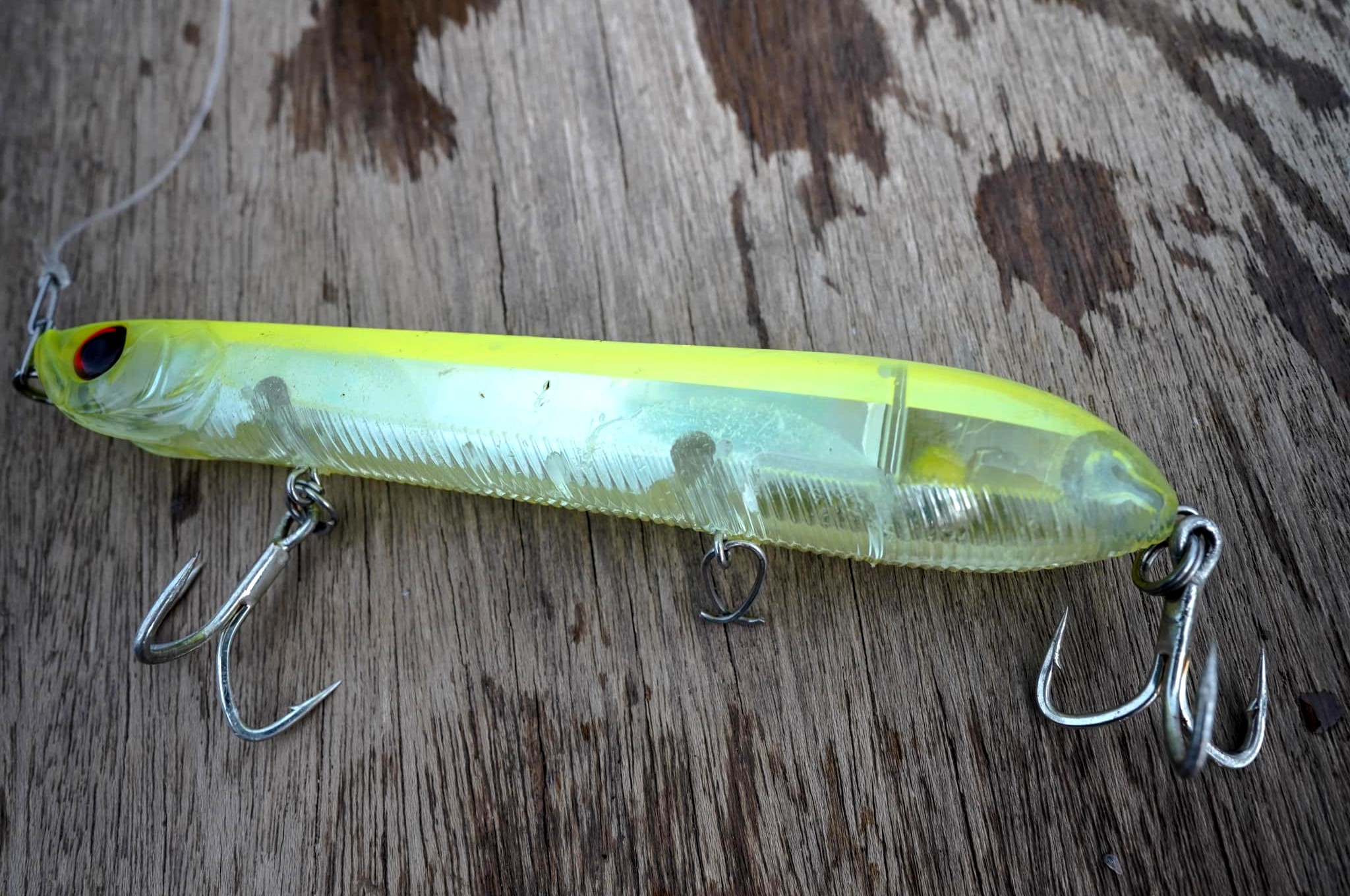
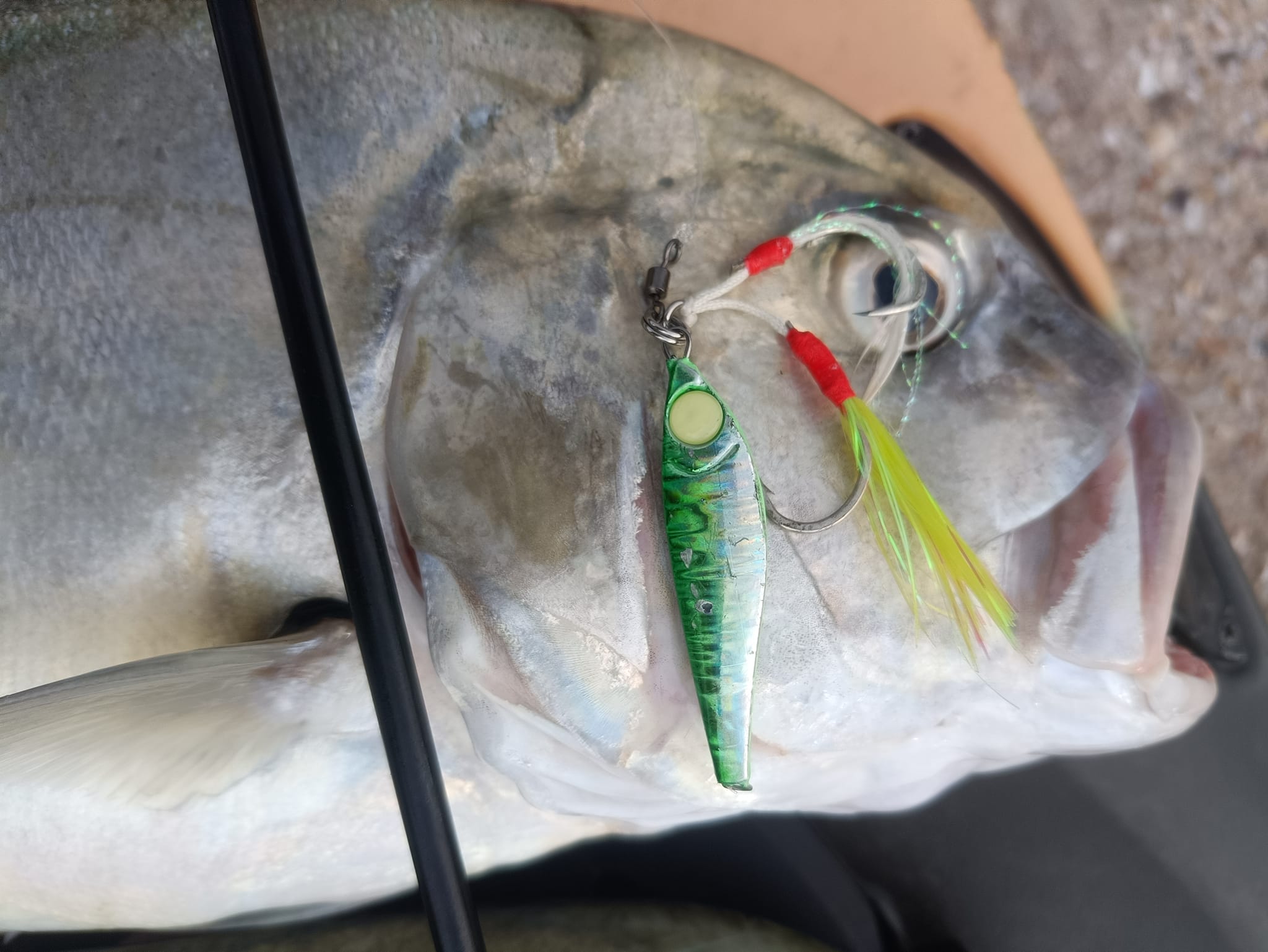
For this technique, jigs in the 10g to 30g range are a good starting point, depending on the depth and current conditions. Bright colours or finishes that imitate the flash of small baitfish are worth trying, especially silver, orange and green.
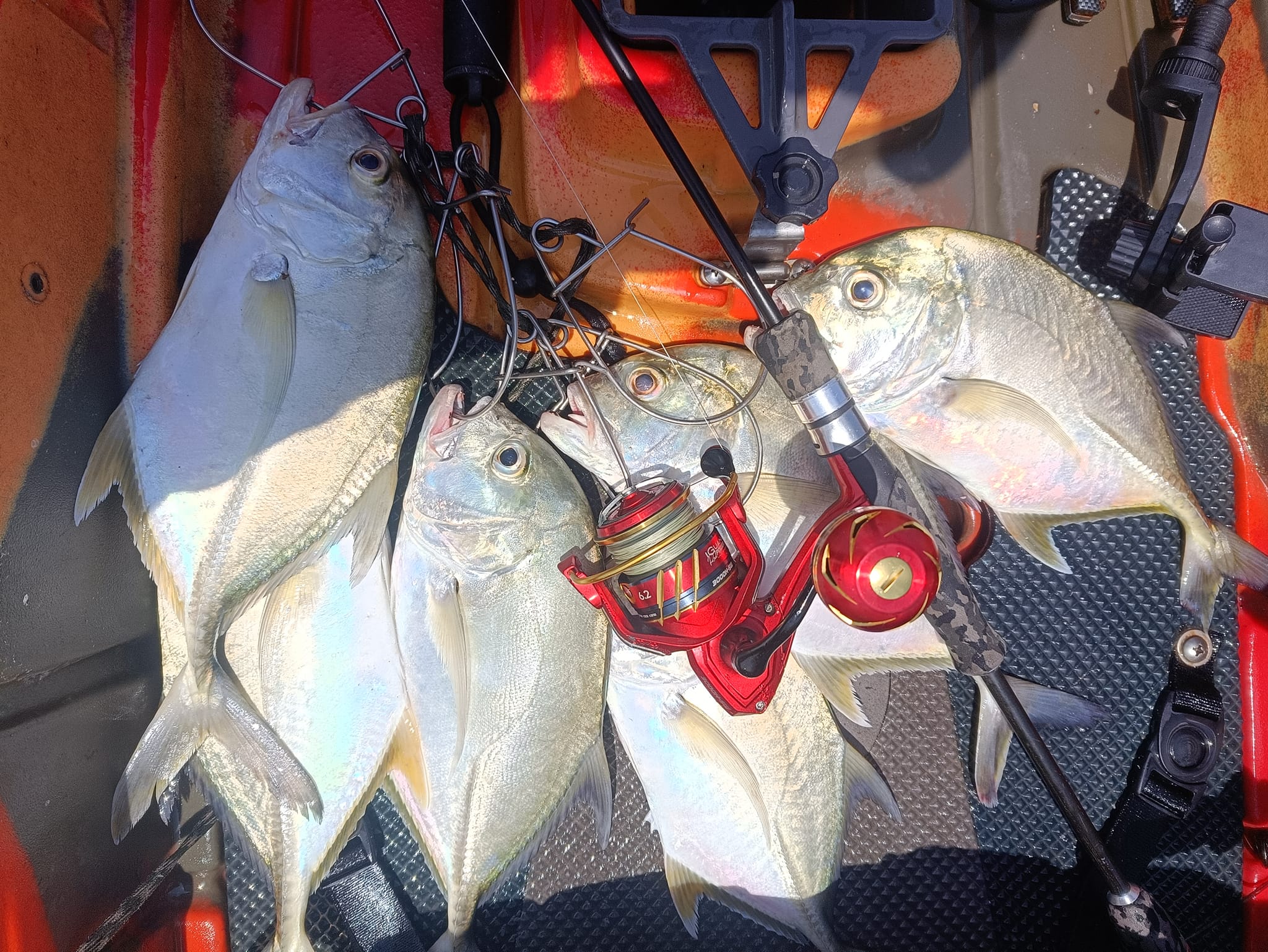
"Jigs in the 10g to 30g range are a good starting point with bright colours are worth trying, especially silver, orange and green.